

You protect your money from cowboy builders by checking a builder before you pay anything, treating a quote far below the others as a warning, paying a small deposit and then in stages as agreed work is done, and keeping a contingency back. Get the price, the specification and the payment stages in writing before work starts.
None of that needs a lawyer. It needs a little patience at the start, when you are keen to get going and a builder who can start next week sounds like good news.
What is a cowboy builder?
It is the everyday name for a trader who takes money and then does poor work, leaves the job unfinished or disappears. The problem is common enough that the government acted on it this year. Its announcement of 28/08/2026 says “More than one in four UK adults who carried out home improvements work in the past 18 months experienced problems.”
Being small does not make a builder a cowboy. Craig Bellamy, founder of Madisons, is clear on that in his film on why we are not the cheapest quote: “I’m not putting down one man bands or smaller building companies at all, in any way, shape or form.” The warning signs are about behaviour, not size.
What is the government doing about cowboy builders?
The government’s 28/08/2026 announcement described two new schemes:
- Trusted Payments. “A new system to protect people’s money during building projects with payments directly linked to key project milestones”, run through an app. The release said the app would go live the following week.
- The Approved Code. A scheme to help people find trusted traders, developed by the Furniture and Home Improvement Ombudsman with the Chartered Trading Standards Institute. Businesses that sign up show they meet higher standards on customer service, transparency and dispute resolution. The release said it would be live with its first firms by the end of September and fully live by December 2026.
Both are schemes that traders join and customers can choose. The release does not make either one compulsory, so a builder outside them is not breaking any rule. Check the current position on GOV.UK before you rely on either.
What are the warning signs?
- A price far below everyone else’s. More on this below.
- A large payment before any work or materials. A deposit to secure a start date is normal. Most of the money up front is not.
- Nothing in writing. No written quote, no specification, no agreed payment stages.
- No way to check them. No references you can call, no previous jobs you can see, no proof of insurance.
- Pressure. A discount that disappears if you do not sign today.
Craig’s own advice is short: “Look after it, do references, don’t always go with the cheapest builder.” You can check our insurance and accreditations on our accreditations page, and read what clients say on our reviews page.
Why is a much cheaper quote a warning sign?
Because the gap has to come from somewhere. In Craig’s experience, “the cheapest quote always costs you more in the end, because A, they’ve probably missed stuff, B, they’re probably trying to do everything themselves and stretch.”
A quote that comes in at around half the price of the others is the one to worry about. Craig puts it bluntly: “half the price, tends to mean that they don’t really have an intention on doing the job.” He describes a run of jobs one winter where Madisons was called in after the event, “going into houses that have been opened up, money gone, deposits paid, and no one to be seen.”
(Craig Bellamy, founder of Madisons, in his film on why we are not the cheapest quote.)
Watch the film with its transcript: Why we are not the cheapest quote
Comparing quotes only works when every builder is pricing the same thing, which is why a written specification matters. Our design and build service gives you one team and one price for the whole project.
How should you pay a builder?
In stages, so the money follows the work. There is no single legal formula, but the principle is simple: a modest sum to secure the start date, money for materials shortly before work starts, then payments as agreed stages are finished.
This is how Craig sets it out for Madisons projects. “We build your house with your money, because at the end of the day, it’s your house,” he says. Once a price is agreed, a 5% slot holding deposit secures your start date. About two weeks before work starts, a further 15% brings the deposit to 20%, which covers the site set up and materials. For the first two or three weeks on site there are no further charges. After that, stage payments are agreed for your project, for example 20% when the foundations are complete. (Craig Bellamy, founder of Madisons, in his film on how payment stages work.)
Watch the film with its transcript: How do builder payment stages work?
Why keep a contingency?
Because the ground can surprise anyone, however honest the builder. Craig’s advice is to “keep 10% as a good contingency plan until you’re out the ground”, since nobody knows what digging will turn up: old drainage, even a well. Once the build is out of the ground, he says you are fairly safe to spend it on the finishing touches. (Craig Bellamy, founder of Madisons, in his film on keeping a contingency.)
A contingency also protects you from a cowboy’s favourite trick: a low price, then a stream of extras once you are committed. If your budget has no room left, you have no room to say no.
Watch the film with its transcript: How much contingency should I keep for a build?
What does the law expect from a builder?
Under the Consumer Rights Act 2015, section 49, every contract to supply a service includes a term that the trader must “perform the service with reasonable care and skill”. Where the contract does not fix a time, section 52 says the work must be done “within a reasonable time”.
Those rights are worth knowing, but they are hard to use against someone who has vanished. A written contract, a specification and staged payments do more to protect you day to day. If something does go wrong, GOV.UK has a tool to find your local Trading Standards office.
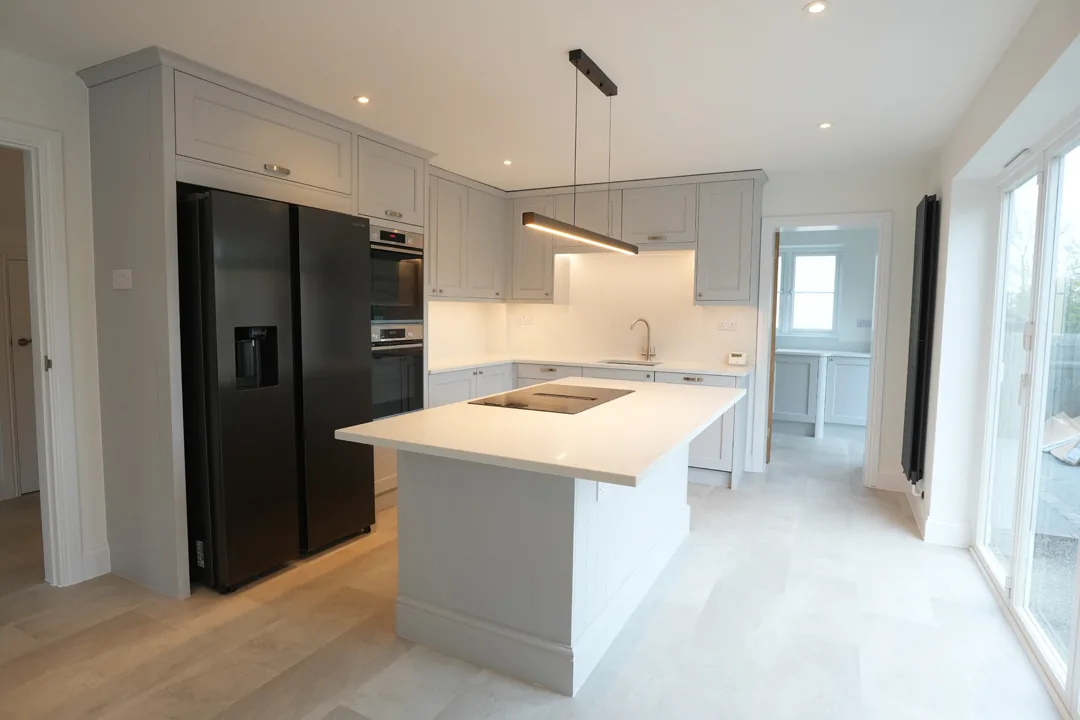
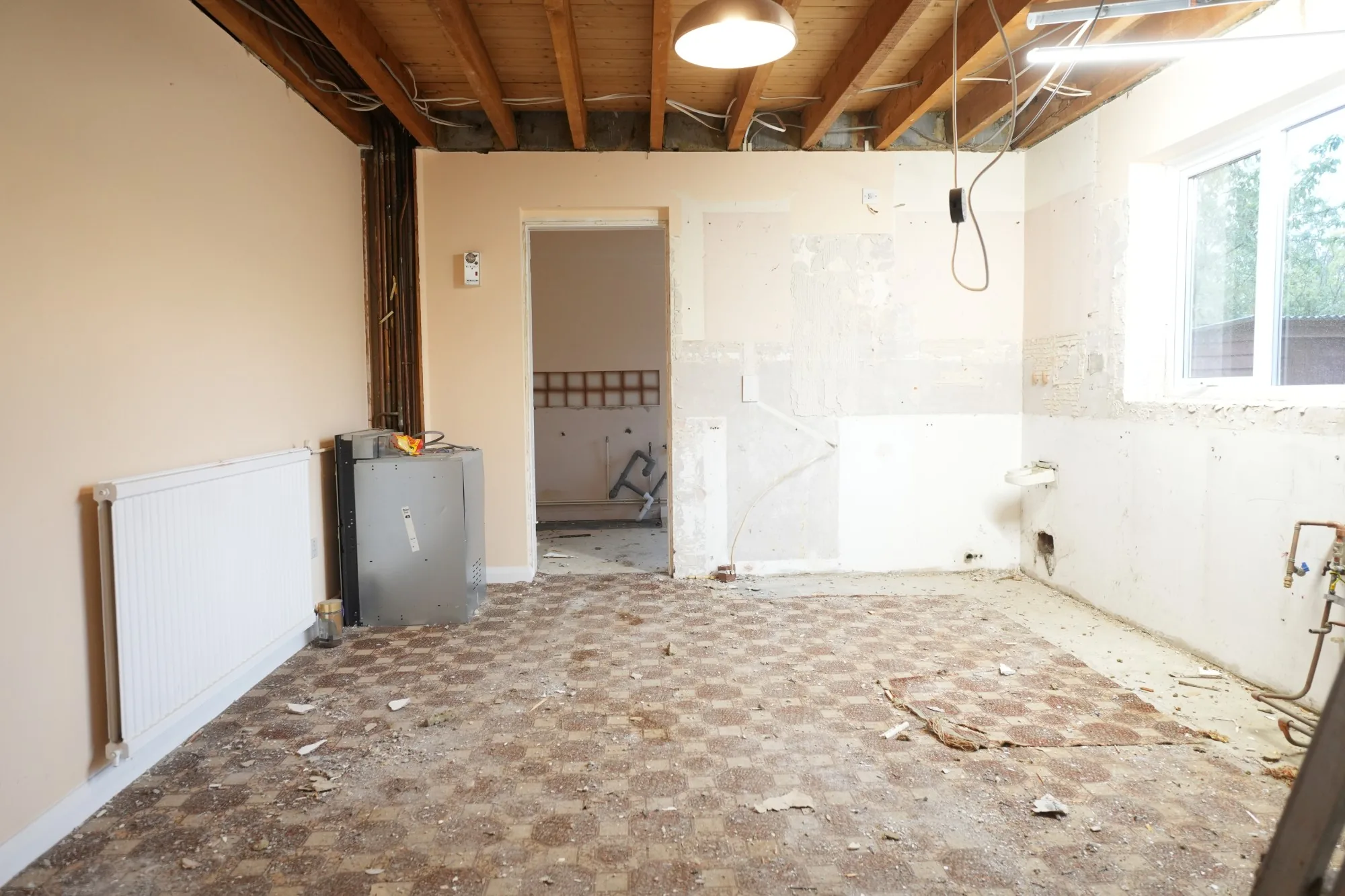
The two Cold Norton photographs show the other side of it: the old kitchen as the owners bought it, and the new one at handover. That whole house refurbishment was handed over on the day we promised.
Key points
- A cowboy builder is about behaviour, not size: money taken, poor work, or nobody on site.
- Treat a quote far below the others as a warning sign, not a bargain.
- Pay a small deposit to secure a start date, then pay in stages as agreed work is finished.
- Keep around 10% back as a contingency until the build is out of the ground.
- Get the price, specification and payment stages in writing.
- Neither of the government’s new schemes, Trusted Payments and the Approved Code, is compulsory, so check a builder yourself either way.
Frequently asked questions
How much deposit should I pay a builder?
There is no legal figure, so agree it in writing. On Madisons projects, Craig describes a 5% slot holding deposit to secure the start date, then a further 15% about two weeks before work starts to cover the site set up and materials. Be wary of a builder who wants most of the price before any work or materials arrive.
What is the government’s Trusted Payments scheme?
It is a payment system announced by the government on 28/08/2026, in which customers’ money is linked to key project milestones and released as the work gets done, through an app. The announcement does not make it compulsory. Check GOV.UK for its current status before relying on it for your project.
Is a small building firm riskier than a large one?
Not in itself. Plenty of one man bands and small firms do excellent work, and Craig started small himself. The risk comes from behaviour: a price far below the others, large payments up front, nothing in writing and no references. Judge any builder, of any size, on those points.
What can I do if a builder takes my deposit and disappears?
Keep every record: the quote, messages and proof of payment. You can find your local Trading Standards office through GOV.UK to complain about the trader, and Citizens Advice explains your consumer rights. For a dispute over money, take independent legal advice. Staged payments limit how much is at risk in the first place.
Talk to us about your project
We give you one clear, written quotation before work begins, with the payment stages set out plainly. Projects start from £25,000. Get a quote, or call 01245 330103. We respond to every enquiry within 24 hours.