

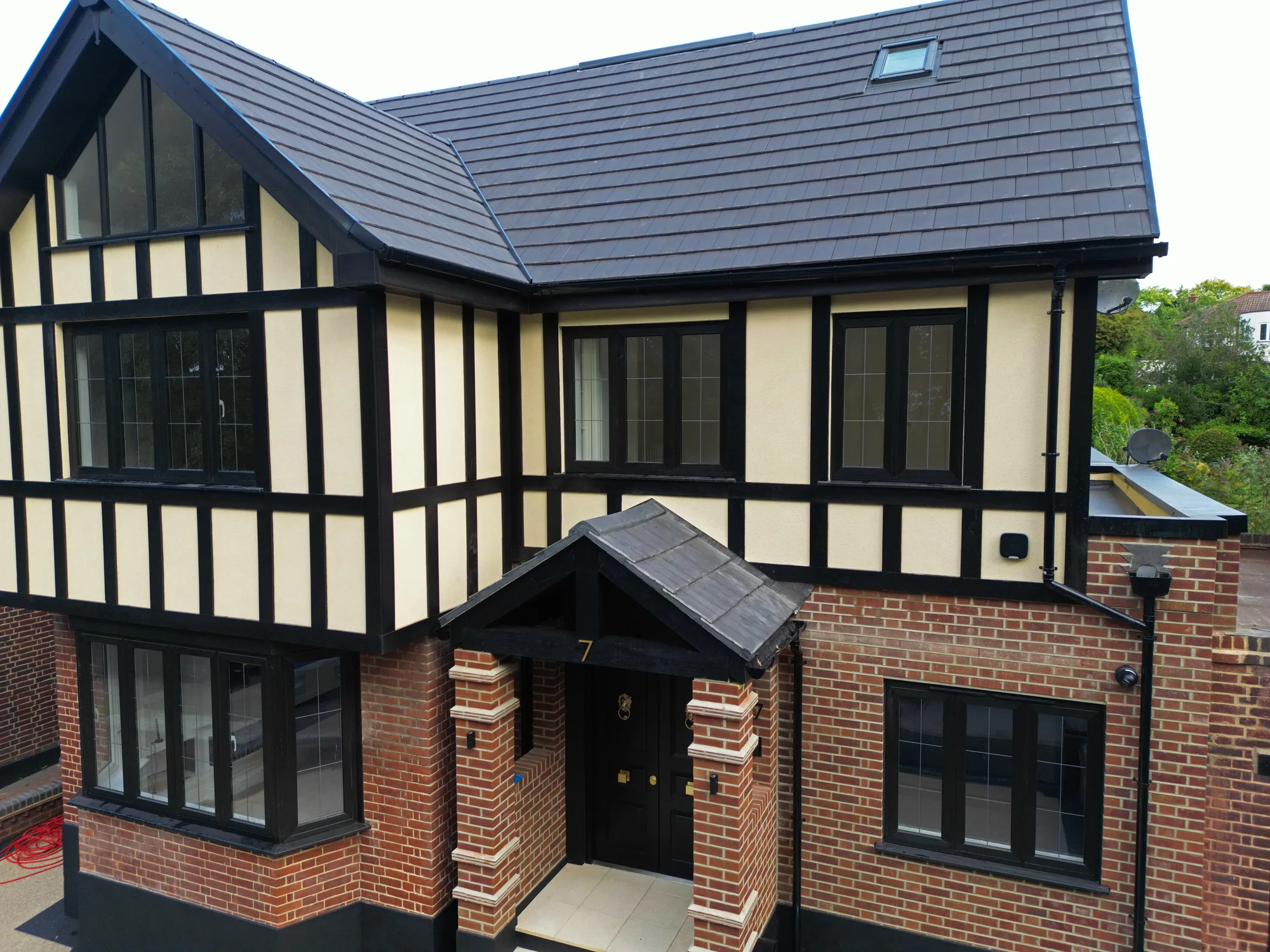
Areas · Epping
Builders in Epping
Extensions, renovations and new space for the market town at the end of the line.
The area
Epping is the last stop on the Central line and the first proper market town you reach heading out of London into Essex, and it trades happily on both facts. The long, wide High Street, with lanes running off it and listed buildings from the sixteenth to the nineteenth centuries along it, is the town’s spine; the avenues off it carry big interwar and postwar family houses, and beyond the town sign the lanes turn rural fast. Buyers come for the commute and stay for the town, then discover their house needs to grow with them.
The houses here
Four kinds of Epping house
Epping’s housing falls into four broad groups, and each points to different work.
- The High Street and its lanes. Older buildings, many of them listed, inside the Epping conservation area. Work here means listed building consent where it applies, repairs in the right materials, and additions at the back of the plot that stay out of the street’s view.
- Bell Common and Coopersale Street. Two smaller conservation areas on the town’s edges, each with its own council appraisal. An extension there is judged on how it sits in the conservation area as well as on the house itself.
- The interwar and postwar avenues. Family houses with gardens deep enough for a proper rear extension and roofs that take a loft conversion. Here the design question is about the family’s brief rather than the fabric.
- Houses beyond the town. Farmhouses, cottages and larger detached homes out in the lanes, in the green belt, where the size of an addition matters as much as its design.
Services for Epping
The town’s family stock takes rear and double storey schemes well, and the long gardens behind many of the older houses give room to work with.
Steep older roofs and broad newer ones both hold bedrooms waiting to be built.
Period and listed building work
For the High Street’s listed buildings and the older houses around Bell Common and Coopersale Street: consent first, craft throughout.
For whole house schemes and rural projects outside the town, one contract keeps a complicated build calm.
Proof
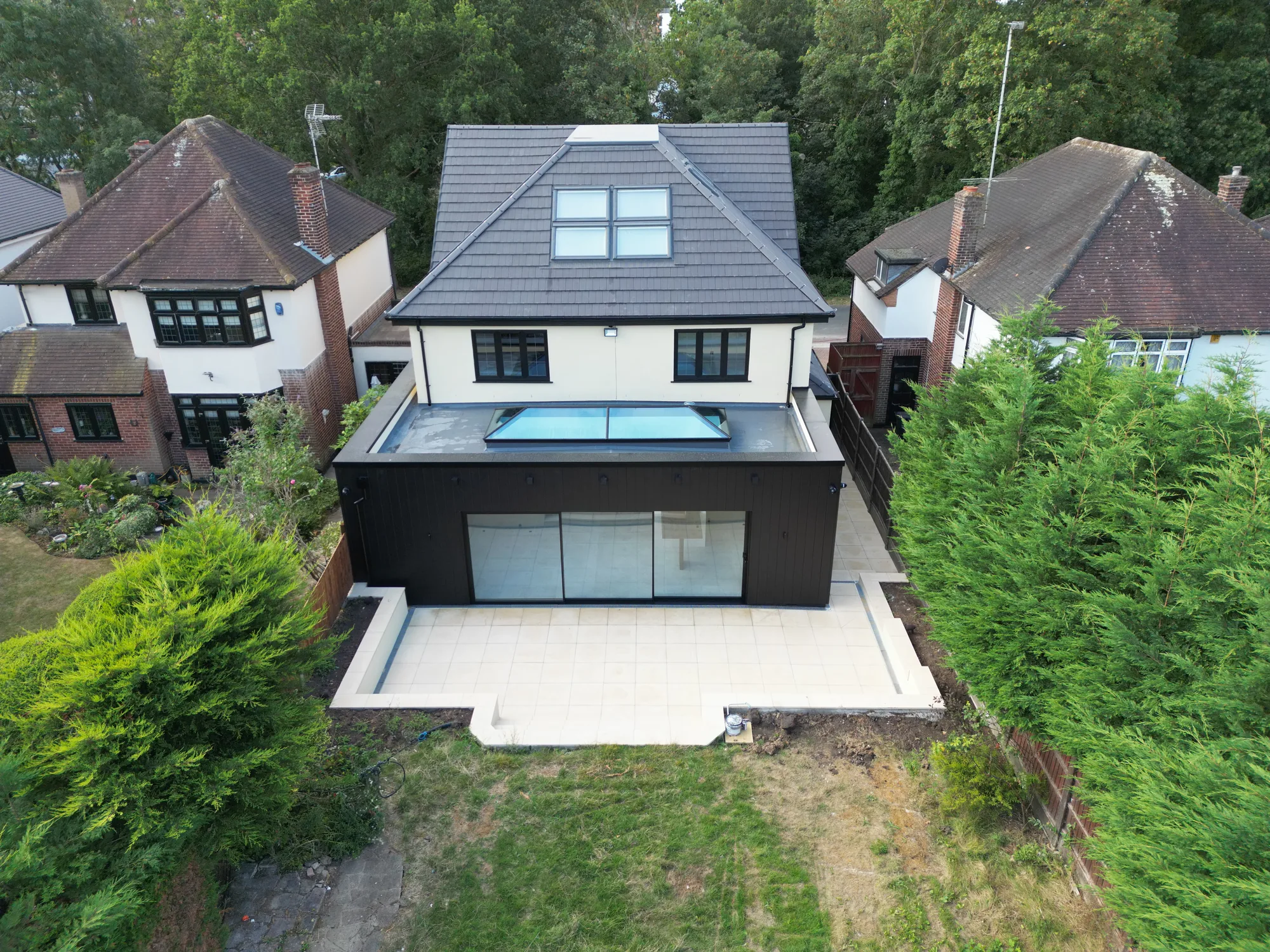
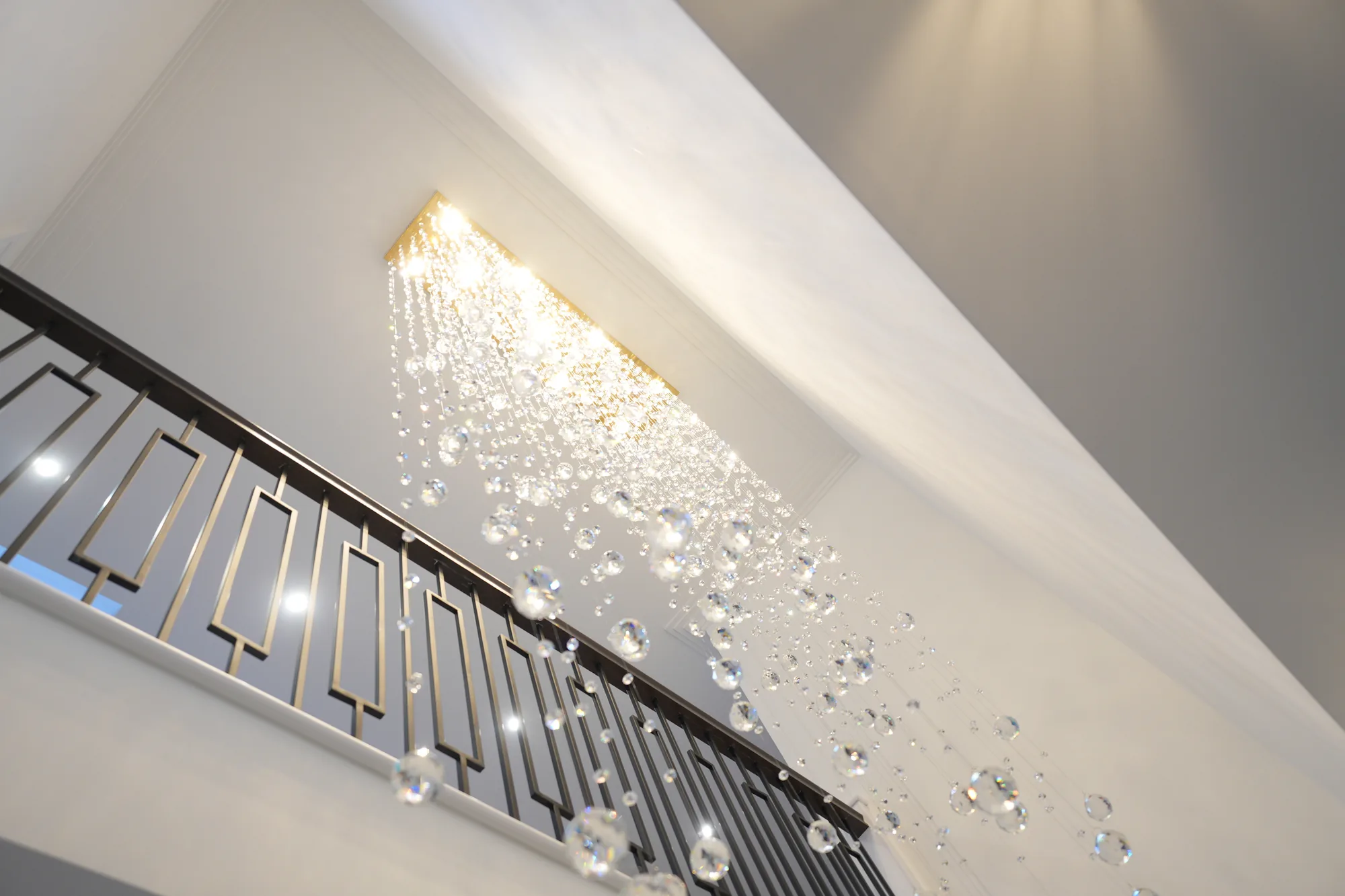
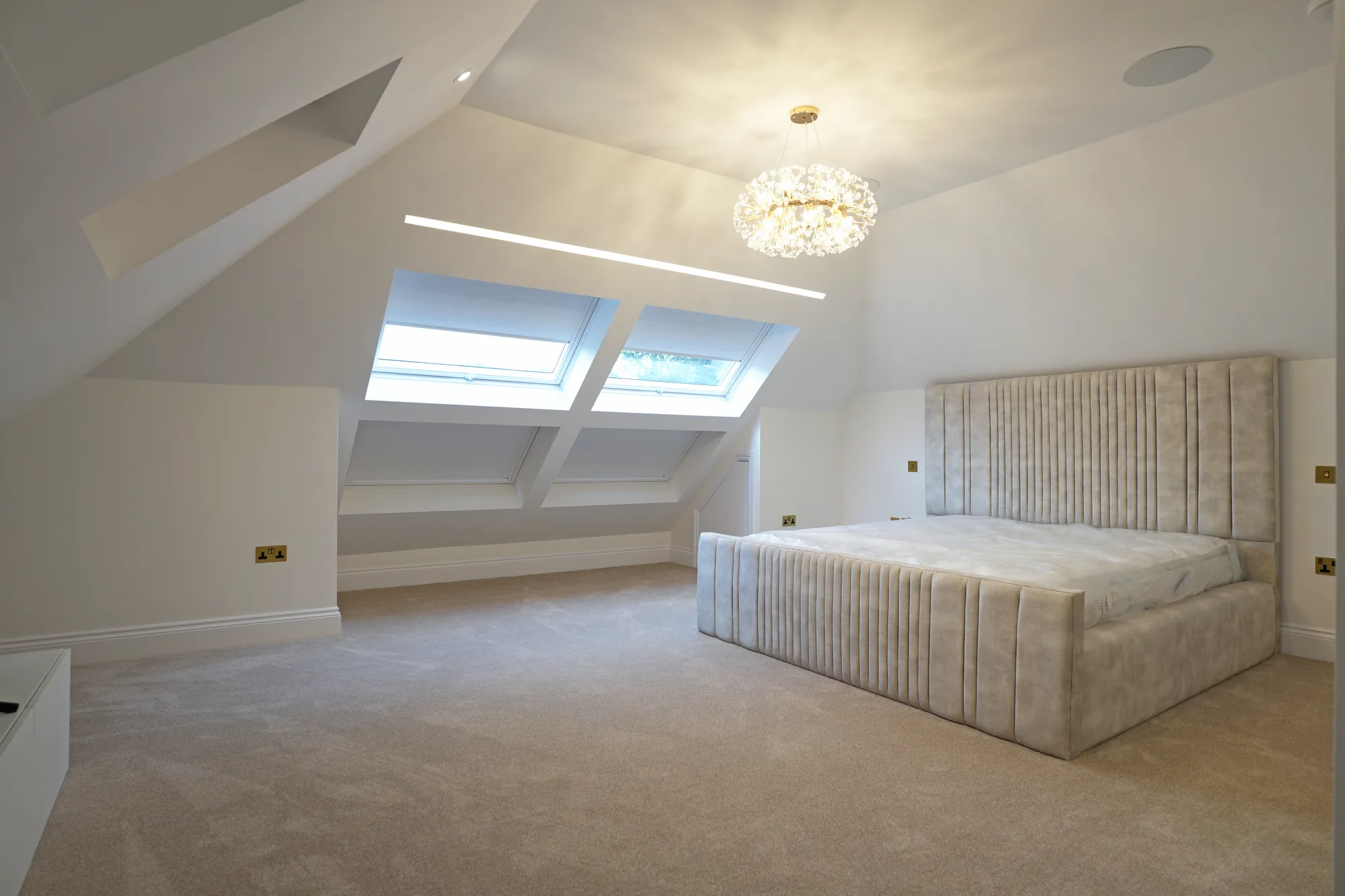
We publish no named Epping project yet; none exists in our records, and inventing one is not how this firm works. Our nearest published work is about five miles south as the crow flies: the Chigwell design and build, a £3.6m whole house project on the Central line’s Hainault loop, rebuilt from the ground floor up with a timber clad exterior designed to match its road. The case study includes a 4K walkthrough film. Google reviews stand at 5.0 from 4 (read them).
The market
Epping’s mix is unusual: a genuine tube commute, a genuine market town, and green belt keeping the two in proportion. That keeps family demand constant and the housing supply flat, so the improvement market does the growing. Around the conservation area the design bar is higher, and rightly; further out the plots give schemes room to breathe.
Nearby work · The Chigwell new build
Planning
The council is on the High Street
Epping is home to Epping Forest District Council’s own civic offices, and the council decides planning here under its Local Plan 2011 to 2033, adopted in March 2023. The plan describes the town’s attractive setting within open countryside and the Metropolitan Green Belt, which keeps it apart from Theydon Bois, Waltham Abbey and North Weald Bassett. Over 90 percent of the district is green belt.
For houses inside the town, extensions are judged mainly on design: policy DM9 wants an addition to read as part of the house it joins, in materials that match or complement it. For houses in the green belt, policy DM4 allows extensions that are not disproportionate to the original building, judged case by case rather than against a fixed percentage.
The town has four conservation areas: Epping itself, covering the town centre and appraised by the council in 2009, plus Bell Common, Coopersale Street and Copped Hall. There is no Article 4 direction in Epping on the council’s current list, so outside the conservation areas the normal householder rules apply. The council’s special area of conservation mitigation payments for Epping Forest are tied to net new homes, so they normally apply to new dwellings rather than extensions. Where an application is needed, we coordinate it with the district council, whose offices are in Epping, as part of the project.
Nearby
We also build in Theydon Bois and Ongar.
Local FAQ
Which conservation areas are there in Epping?
Four. The Epping conservation area covers the town centre and its High Street, first designated in 1969, and there are three smaller ones at Bell Common, Coopersale Street and Copped Hall. Inside them, more external work needs permission. There is no Article 4 direction in Epping on the council’s current list.
Is Epping in the green belt?
The town itself is a built up area set within the green belt, so most houses in it are judged mainly on design. Houses out in the surrounding lanes are in the green belt, where Epping Forest District Council’s policy DM4 also limits how much an extension adds to the original building. We check which applies to your address first.
Sources: Epping Conservation Area Character Appraisal (2009), Epping Forest District Council; Conservation areas, Epping Forest District Council; Article 4 directions, Epping Forest District Council; Local Plan 2011 to 2033, Part One, Epping Forest District Council; Epping Forest SAC guidance note (2023), Epping Forest District Council.

Enquiries
An Epping house that needs to grow?
Tell us how. We respond within 24 hours.
Get a quote