

The short answer
Builders’ quotes vary because each builder is pricing a slightly different job: different assumptions, specifications, exclusions and allowances. To compare them fairly, give every builder the same drawings, engineering and written specification, then check what each quote includes, excludes and allows for before you look at the total.
Two quotes for the same extension can be thousands apart, and the lower one is not always the better deal. This guide explains where the gaps come from, how to set up a like-for-like comparison and what to check on each quote. It draws on guidance from the Federation of Master Builders and Citizens Advice, and on how we approach design and build projects in Essex.
Key takeaways
- Quotes differ mostly because builders have been given different information, not because one of them is guessing.
- Quotes priced without an engineering pack are guesses, so settle planning and structural design before you ask for prices.
- The FMB recommends at least three detailed written quotes, each priced from the same drawings and specification.
- A wildly cheaper quote usually means something has been left out, so ask why before you accept it.
- A quote is a fixed price and an estimate is a best guess, so check which one you have been given.
Why do builders’ quotes for the same job differ?
Rarely because someone is trying to rip you off. Far more often each builder has filled the gaps in the information differently. The Federation of Master Builders (FMB) puts it simply in its guide to choosing a builder: “The more detail you agree before the quote, the less room there is for different assumptions.” Where the detail is missing, the builder has to guess, and every guess moves the price.
- Specification. One quote allows for a mid range kitchen and standard tiles, another for a premium finish. The totals are not comparing like with like.
- Scope. Decorating, flooring, making good, skip hire or building control fees may be in one quote and silently left out of another.
- Allowances. Provisional sums and contingencies are the builder’s best guess at things nobody can see yet. Generous in one quote, tiny in the next.
- Engineering. Steels, padstones and foundation depths are only known once a structural engineer has done the design.
- How the builder works. Some use their own teams, others sub-contract nearly everything, and some are stretched across too many jobs.
The FMB also advises asking why prices differ, for example whether painting and decorating is included, or whether a cheaper quote has priced lower quality fixtures, in its guide to renovation costs and prices.
Why do quotes priced without an engineering pack turn into guesses?
Because the biggest unknowns on an extension or structural alteration, the steelwork and the foundations, are decided by the engineer, not the builder. Craig Bellamy, founder of Madisons, explains the problem in his film on whether planning should be approved before you ask for prices: “you’re going to be going out trying to get prices on a build from builders without an engineering pack.”
Craig’s advice on sequencing is on the page for should planning be approved before I ask for prices? The short version is architect, planning submission, approval, engineer, then tender the whole pack to builders. Our guide to what the engineer actually fixes is in what does a structural engineer do?

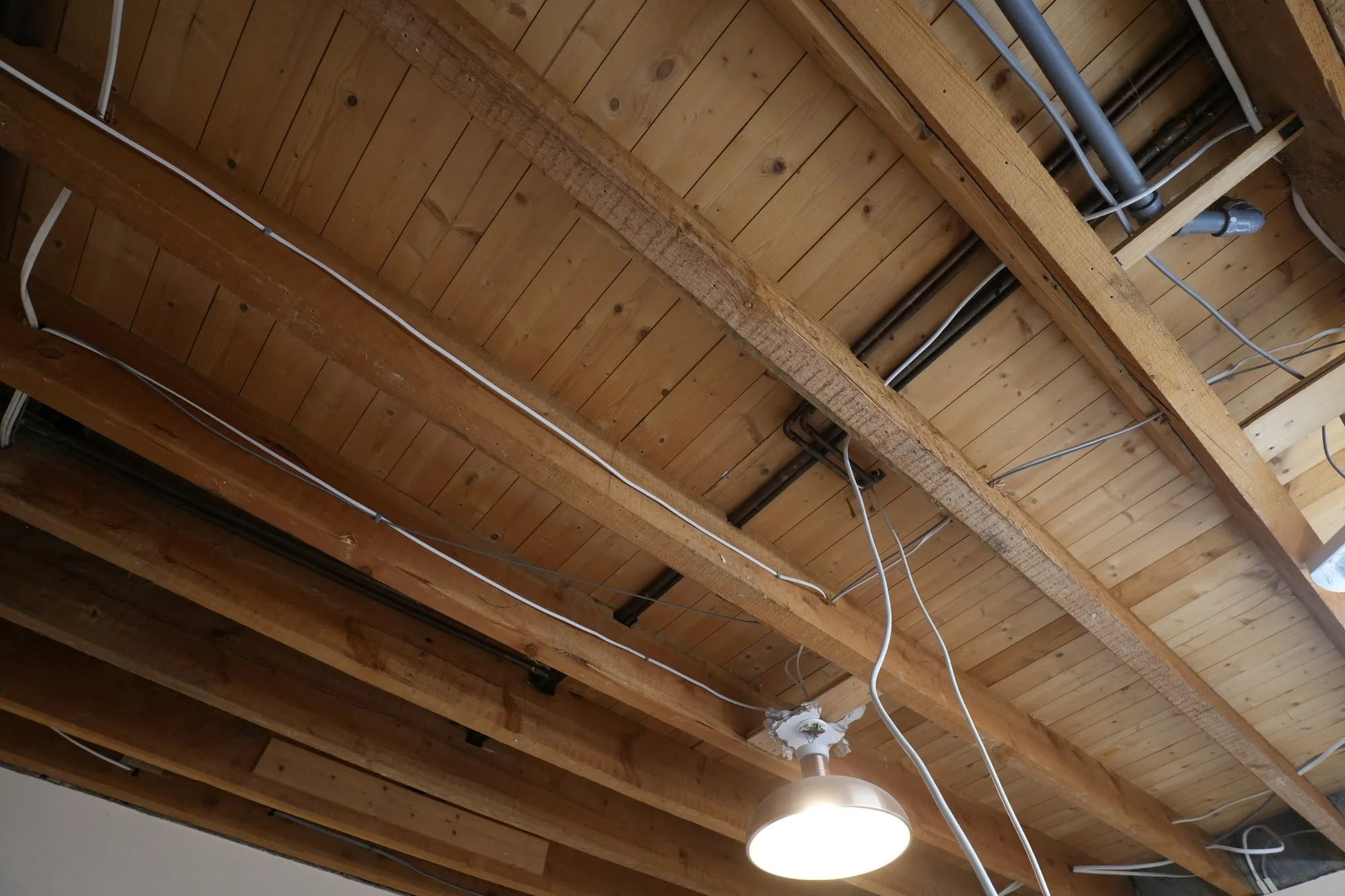
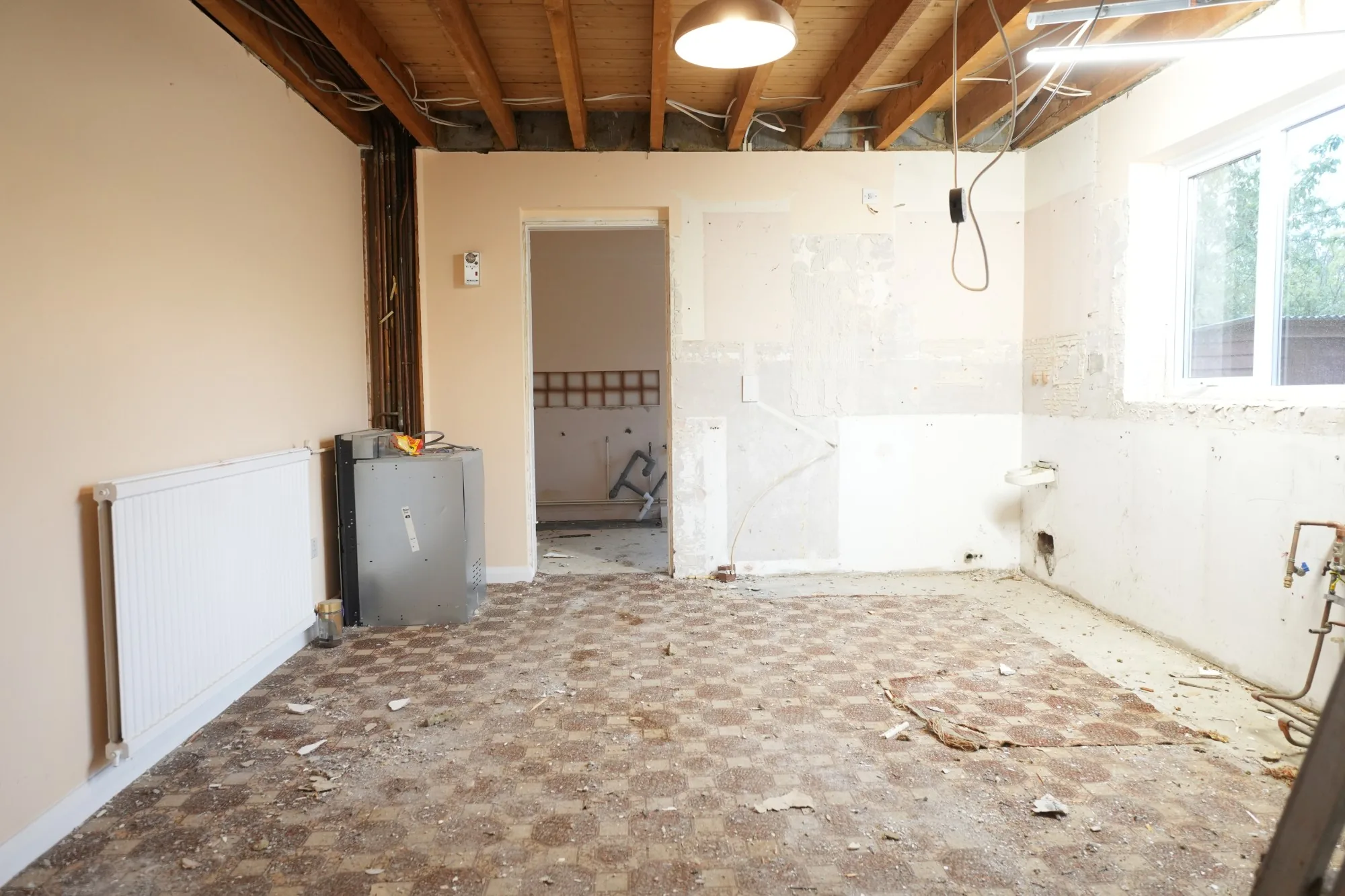
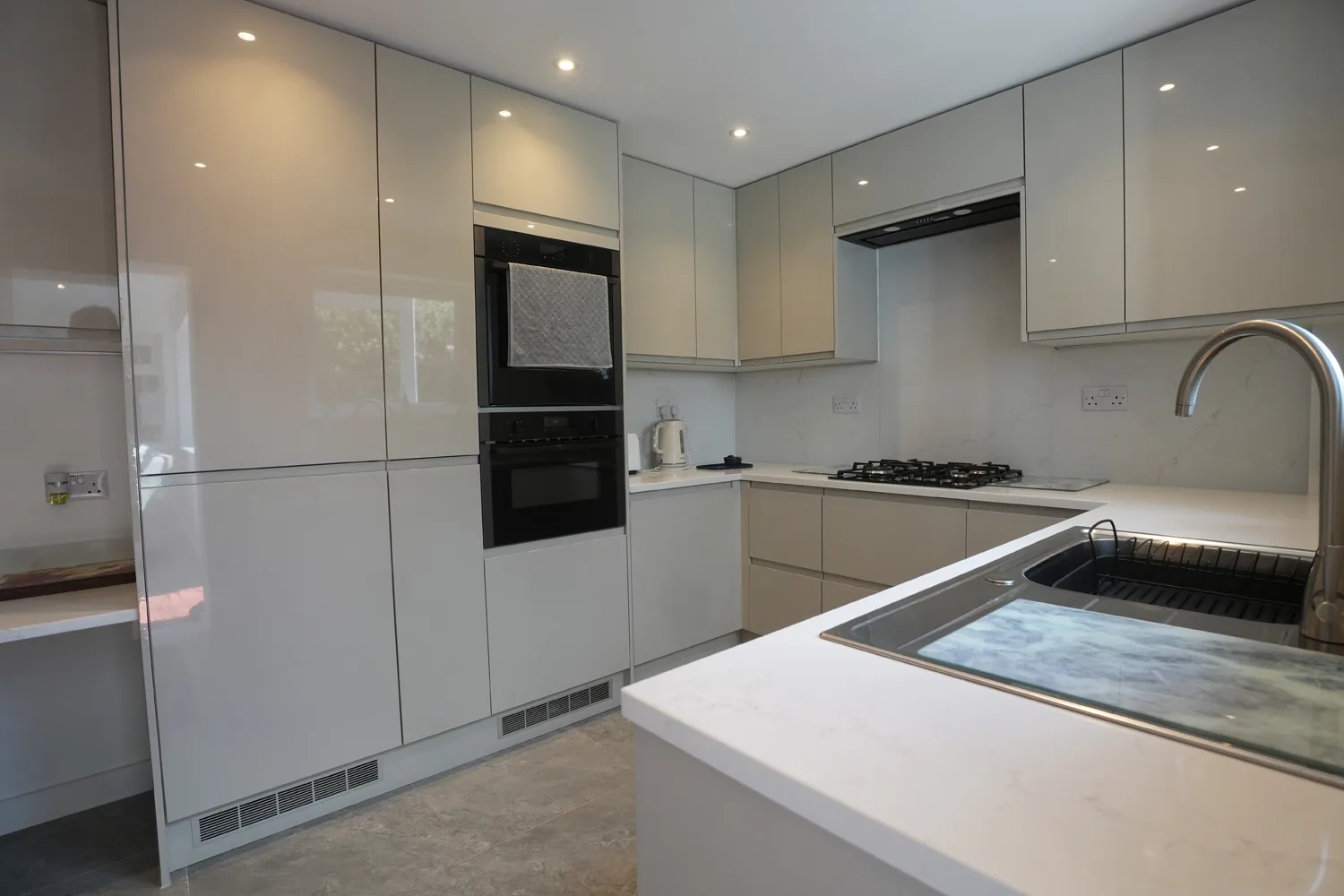
Photographs like this show why. Until a house is opened up, nobody pricing from drawings can see what the structure needs. Our Cold Norton renovation page shows how a whole house project looks as it moves from strip out to finish.
How do you set up a like-for-like comparison?
Give every builder exactly the same pack. The FMB says “Give every builder the same information” and “For a fair comparison, each builder needs to be pricing the same job.” In practice that means:
- The architect’s drawings, with planning approval where it is needed.
- The structural engineer’s drawings and calculations.
- A written specification for the main finishes, fittings, kitchen, bathrooms and flooring.
- Your expected start date and timescale.
- A note of who is responsible for what, such as building control fees, skip hire and making good.
Send the pack to three or four builders at the same time and ask them to price it in writing. The FMB recommends “detailed written quotes from at least three builders” and warns “Never go with the first quote you get from a builder.” Both statements are in its guide to choosing a builder.
Tip
Ask every builder the same questions in writing and keep the answers. If one builder gets extra information, such as a site visit conversation about the kitchen, share it with all of them so they are still pricing the same job.
What should a written builder’s quote include?
The FMB says “A written quote should be detailed enough for you to understand what you are paying for.” Check for the full scope of work, anything specifically excluded, and any allowances or provisional costs. We would also expect the quote to cover:
- Specification. The materials, fittings and finishes priced, by name or by clear description.
- Exclusions. What you are expected to arrange or pay for separately.
- Allowances. Provisional sums, shown separately, with what they cover.
- Timescale. A start window and an expected duration.
- Payment stages. When payments fall due and what has to be done first.
- Insurance. Evidence the builder carries public liability cover.
Allowances deserve special attention. A very small provisional sum for a kitchen or groundworks makes a quote look cheap on day one and then grows later. Our guide to how much contingency to keep for a build explains why we suggest setting money aside for the unexpected, and our post on whether you need a quantity surveyor covers getting an independent check on a quote.
Is the cheapest quote ever the right one?
Sometimes, but be sure you know why it is cheapest. In his film on why Madisons is not the cheapest quote, Craig says: “the cheapest quote always costs you more in the end, because A, they’ve probably missed stuff, B, they’re probably trying to do everything themselves and stretch.” He adds that he is not putting down small firms or one-person builders. His advice is to be wary of a quote that is wildly cheaper than the rest.
The FMB gives the same practical test: “Find out why – compare the detail behind the total.” If the builder can show you what is included and the specification matches, a lower price may be perfectly honest. If it cannot, treat the gap as a warning. Our page on why we are not the cheapest quote has the full film and transcript, and our guide to protecting your money on a building project covers deposits, references and payment terms.
Watch out
A quote that is far below the others, a builder who will not put it in writing, or a request for a large deposit before any work is agreed are all reasons to stop and check references.
Quote or estimate: which have you been given?
They are not the same thing. Citizens Advice says “A quote (sometimes called a ‘quotation’ or ‘fixed estimate’) is a promise to do work at an agreed price” and “An estimate is the trader’s best guess as to how much the work will cost.” That difference matters because your rights if the final bill rises depend on which one you were given, as its guidance on problems with the cost of building work explains.
| Document | What it is | What to check |
|---|---|---|
| Quote | A promise to do the work at an agreed price | That it is in writing and names the scope and exclusions |
| Estimate | The trader’s best guess at the cost | That you understand the final price may differ and why |
Where does design and build fit in?
Design and build changes the question. Instead of tendering finished drawings to several builders, one company designs and builds your project, and you agree one price for the whole job before construction starts. Craig describes the idea at the end of his film: starting a design and build process “where we can look after you from the start” and looking at budgets so the design fits what you can afford. You do not get several builders’ prices on the same drawings, so the comparison shifts to the company itself: its references, its insurance, past projects and how clearly it explains what is in the price. Our design and build service sets out how that works.
Sources and further reading
- How to find a builder, Federation of Master Builders
- How to handle renovation costs and prices, Federation of Master Builders
- Problem with building work, decorating or home improvements, Citizens Advice
Frequently asked questions
Why are builders’ quotes for the same drawings so different?
Because drawings rarely settle everything a builder has to price. One builder may allow for a better specification, include the engineering and building control costs, or carry realistic allowances for the unknowns, while another leaves them out or assumes a cheaper finish. The FMB advises asking why prices differ, for example whether decorating is included or cheaper fixtures have been priced, so you compare the detail behind each total.
What should a building quote include?
A written quote should be detailed enough for you to understand what you are paying for. Look for the full scope of work, anything specifically excluded, and any allowances or provisional costs. It should also show the specification of materials and fittings, how long the work is expected to take, and how payments are staged. If any of that is missing, ask for it in writing before you compare prices.
Should every builder price from the same specification?
Yes. For a fair comparison each builder needs to be pricing the same job, so give them the same drawings, the same written specification and the same expected timescale. The more detail you agree before the quote, the less room there is for different assumptions, and the easier it is to see where a real difference in price or approach comes from.
How many builders should I get quotes from?
The Federation of Master Builders recommends detailed written quotes from at least three builders, and says never to go with the first quote you get. More than a handful rarely helps, because each builder needs time to price properly, so it is better to give three or four good builders a full pack than to send a thin brief to many.
What is the difference between a quote and an estimate?
A quote is a promise to do the work at an agreed price, while an estimate is the trader’s best guess at what it will cost, according to Citizens Advice. That matters because your rights if the final bill is higher depend on which you were given. When you compare builders, check each document says which it is, and ask for a fixed written quote where you can.