

The short answer
Rewire a house when a registered electrician finds the installation unsafe or unfit for how you now live, not simply because it is old. A rewire has two stages: first fix, where new cables are run before plastering, and second fix, where sockets, switches, lights and the consumer unit are connected and the work is tested and certified.
Rewiring is one of the biggest disruptions in an older home, and one of the easiest to plan badly. This guide covers the signs, what each stage involves, what living in during it is like, how the work is certified and why it pays to plan sockets and lighting while the walls are open. It draws on our own Cold Norton refurbishment.
Key takeaways
- Condition matters more than age, so the first step is an inspection by a registered electrician rather than a decision to rip everything out.
- A rewire happens in two stages, first fix before plastering and second fix after decoration, and the gap between them is where most of the planning happens.
- Living in during a rewire is possible, but circuits go off at planned times and the work usually takes longer than with an empty house.
- The cheapest moment to add sockets, circuits and lighting points is while the walls and ceilings are already open.
- The work should be done and signed off by a registered electrician, and you should ask what certificate you will receive.
How do you know if a house needs rewiring?
Age alone is not the test. Electrical Safety First says “there are no set guidelines as to when a property should be rewired”, and that the condition of the installation matters more than its age. What it does list as warning signs are “burn marks on plugs and sockets, sounds of ‘arcing’ (buzzing or crackling), fuses blowing or circuit-breakers tripping”. If you see any of them, the charity advises having a registered electrician check the wiring as soon as possible.
The sensible route is a periodic inspection. It records the condition of the installation and lists anything that needs urgent attention or improvement. A finding that the installation is unsatisfactory is the point at which a rewire, or a partial rewire of the worst circuits, goes on the table.
- You are buying an older house. Ask for an electrical inspection before you commit. Our guides to buying a house to renovate and the Level 3 survey explain why a general survey does not test the wiring.
- You are changing the house. New kitchens, bathrooms, extensions and layout changes all add load and new circuits, and a tired installation may not cope.
- The house is being stripped out anyway. If the ceilings are coming down and the walls are being reskimmed, the extra cost of renewing the wiring at the same time is far smaller than doing it later.
What happens at first fix?
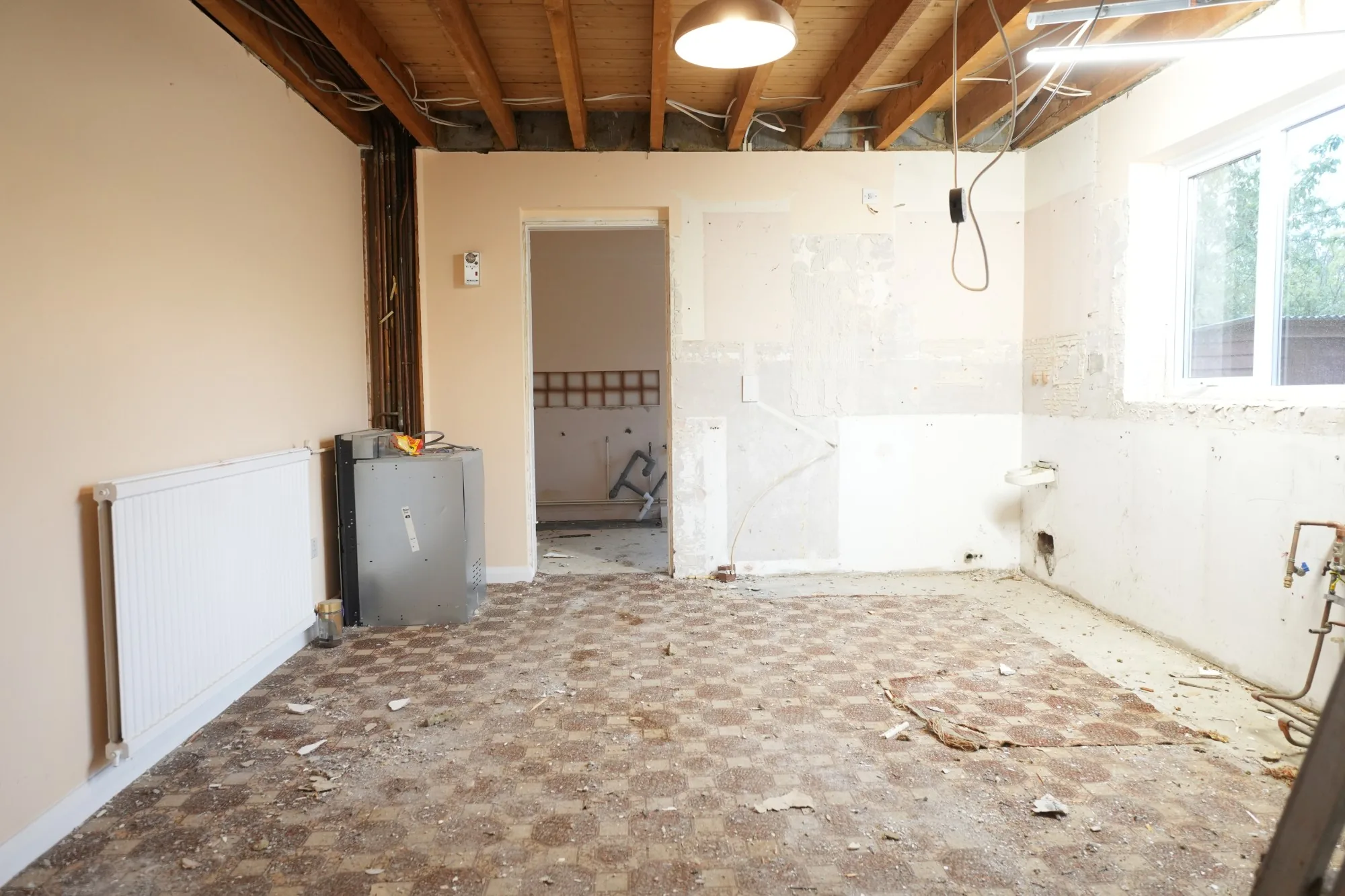
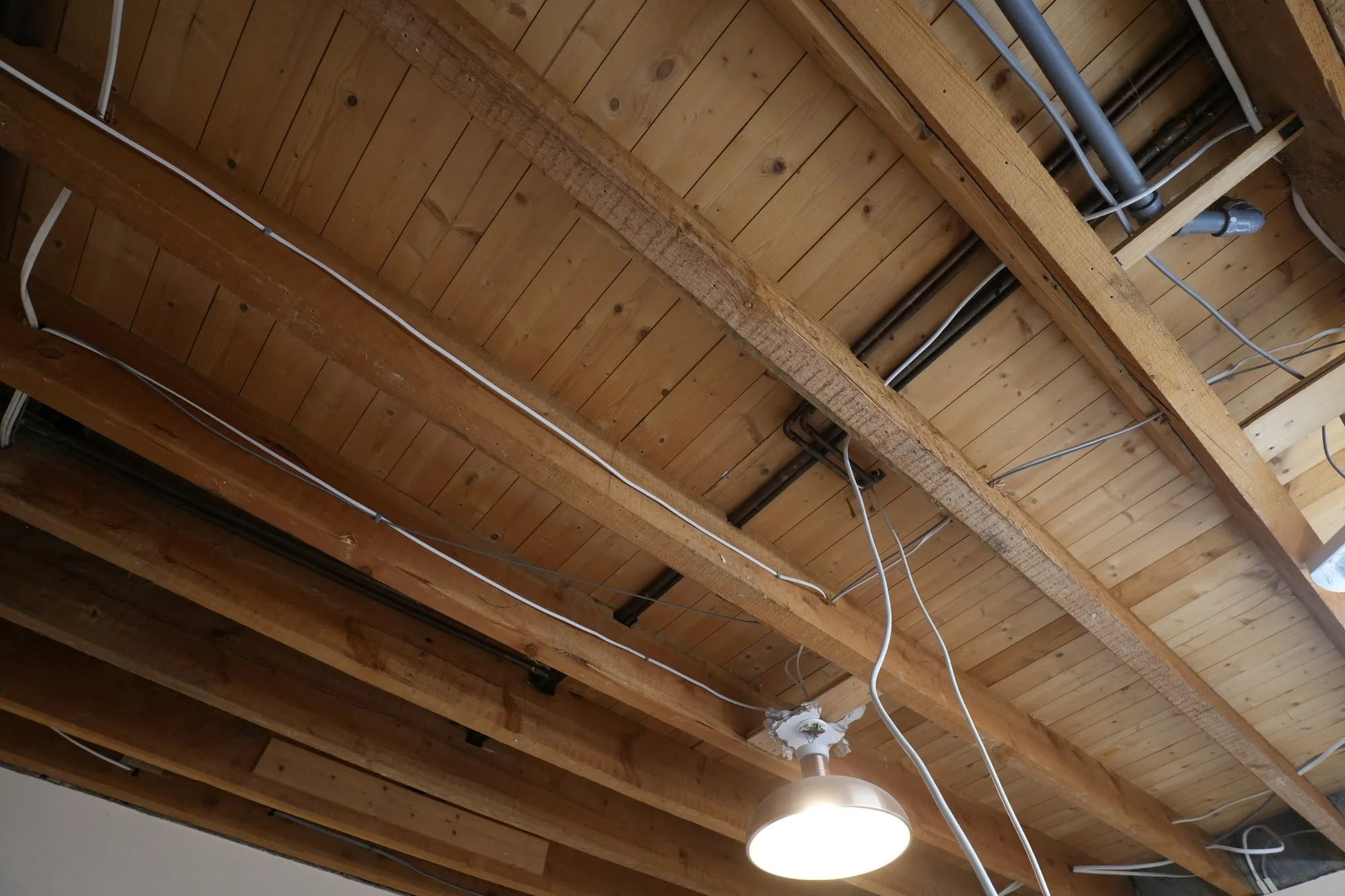
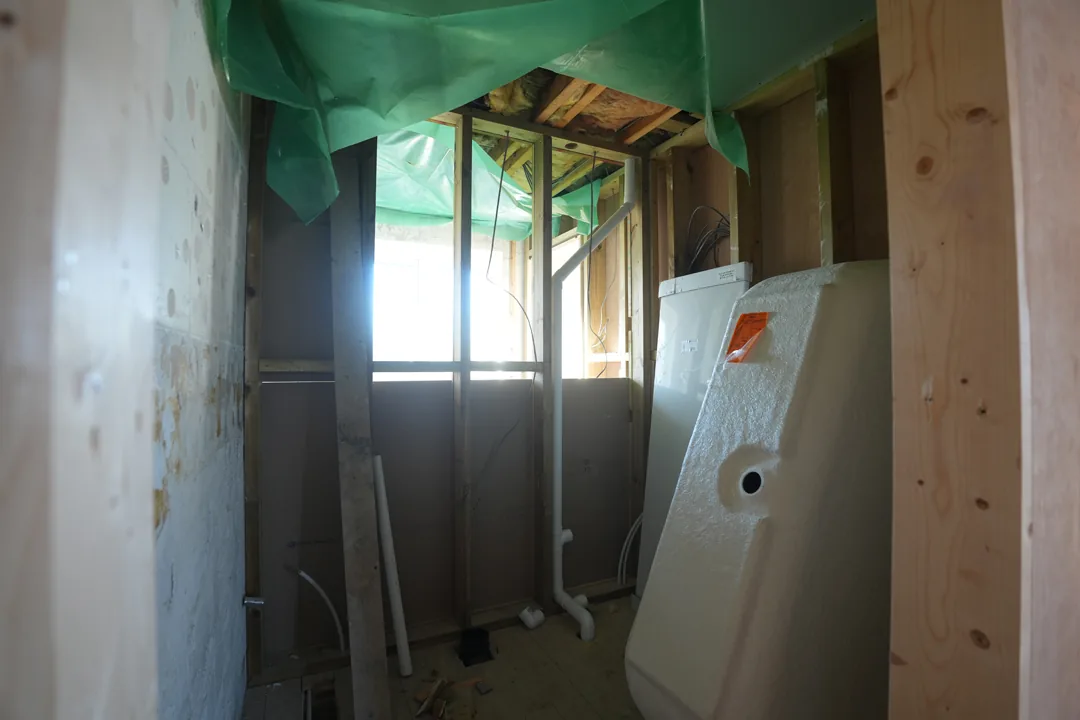
First fix is the “rough in” stage. The electrician takes out the old wiring and runs new cables to every position where a socket, switch, light or appliance will go. Back boxes are fitted, and cable routes are formed through joists and down walls. Everything is done before plasterboard and plaster hide it, which is why first fix needs a stripped or opened-up house.
Plumbers, heating engineers and carpenters work at the same stage, so the electrician is part of a sequence rather than a separate job. On a whole house refurbishment like those we deliver under our whole house renovation service, one team coordinates these trades so cables, pipework and structure are agreed before anything is closed up.
Why the first fix inspection matters
Once plaster goes on, mistakes are expensive to reach. Before the walls and ceilings are closed, walk the house with the electrician and check every room against your plan: where the bed, sofa, desk and appliances will actually sit. Take photographs of cable runs, because they show you where not to drill years from now.
What happens at second fix?
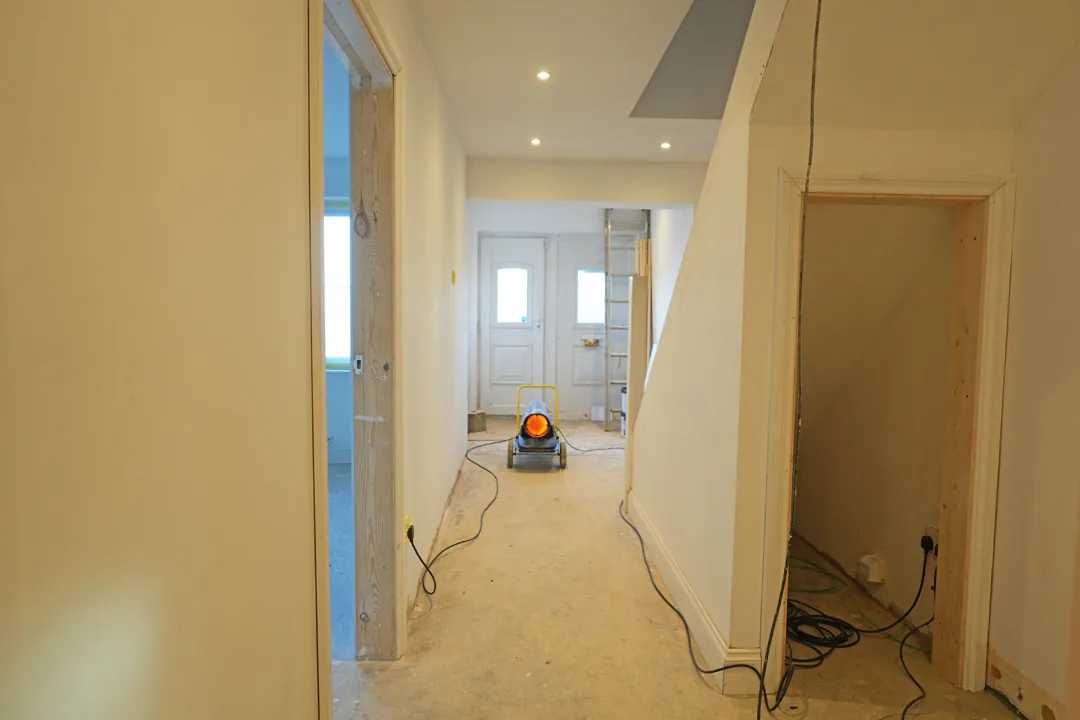
Second fix comes after plastering and, usually, after the walls have been decorated or are close to it. The electrician fits sockets, switches and light fittings, connects the consumer unit (the fuse board) and tests every circuit. This is the stage you notice, because the house suddenly has working lights again.
| Stage | What happens | What you decide |
|---|---|---|
| First fix | Old wiring removed, new cables and back boxes installed before plastering | Where every socket, switch, light and appliance point goes |
| Plastering and decoration | Walls and ceilings closed up and finished | Colours, finishes and fittings |
| Second fix | Accessories and lights fitted, consumer unit connected, circuits tested | The style of sockets, switches and light fittings |
Can you live in the house during a rewire?
Often you can, but it is a trade off between comfort and speed. Craig Bellamy, founder of Madisons, explains the principle in his film on staying in the home: “if you do stay in the home, that that may increase the time and also increase the cost.” The reason, he says, is that the builder has to “turn off the power, turn it back on, turn off the plumbing, turn it back on every single night” so the household can keep living there.
Watch the film with its transcript: Can you live in your house during a renovation?
For a rewire, that means the house is worked on in sections. Circuits are isolated, the old and new wiring cannot share the same cable route, and rooms are cleared in turn. Our advice on staying in the home sets out the trade off, and our whole house renovation page says that a room by room programme lets a household stay but takes longer, while a full strip out with the house empty is faster.
Watch out
Do not let anyone without the right credentials do electrical work to save time. Electrical Safety First advises using a “competent, experienced registered electrician”, and warns that complex work not signed off by one could affect your insurance or your ability to sell.
How is a rewire certified?
In England, electrical safety in homes is covered by Approved Document P, which the GOV.UK page describes as the “Building Regulation in England covering electrical safety in dwellings”. The Planning Portal summary says the 2013 edition reduced the range of electrical installation work that is notifiable, and that installers who are not a registered competent person can use a registered third party certifier instead of the building control body.
You do not need to memorise which jobs are notifiable. Before the work starts, ask your electrician three things: whether the work is notifiable, how it will be certified, and which certificate you will be given at the end. Keep that paperwork with your deeds, because a future buyer’s solicitor may ask for it.
How do you plan sockets and lighting while the walls are open?
This is the part of a rewire that pays back every day. When the walls are open, adding a socket or a lighting point is a small change to the plan. After plastering and decoration, it means chasing out fresh plaster and making good.
- Draw each room with the furniture in it. Mark the bed, sofa, desk, television and appliances, and put sockets where you will actually use them.
- Think about lighting in layers. General lighting, task lighting over worktops and desks, and softer lighting for evenings can all be on separate circuits or switches.
- Add what you will want later. Spare ways for a home office, outdoor lighting or an extra circuit are easier now than later.
- Agree the heights and positions of switches and sockets. Kitchens, bathrooms and bedrooms each have different needs.
Tip
Electrical Safety First suggests planning your appliance layout so you do not “overload any sockets” or rely on extension leads, and having an electrician install extra outlets. For kitchens and bathrooms, agree the electrical layout with the people fitting them; our kitchens and bathrooms team plan sockets, lighting and appliances together, and our internal layout changes work is the moment when walls move and circuits follow.
Sources and further reading
- Do I need a rewire?, Electrical Safety First
- New Year New Home: Electrical Safety Tips For Home Renovation, Electrical Safety First
- Electrical safety: Approved Document P, GOV.UK
- Approved Document P, Planning Portal
Frequently asked questions
How long does it take to rewire a house?
It depends on the size of the house, how many circuits and points it needs, how easy the cables are to reach and whether anyone is living there. A registered electrician can only give a sound estimate after seeing the property. When a rewire is part of a whole house refurbishment it runs alongside the other trades, and our whole house renovation page says a refurbishment typically takes 8 to 12 weeks on site.
Will I have power during a rewire?
Not continuously. The electrician has to isolate circuits to work on them, and the old and new installations cannot both be live in the same part of the house. Ask your electrician how they will keep essential circuits running, or provide temporary supplies, so a household can cope, and agree this before the work starts.
How do you know if a house needs rewiring?
Electrical Safety First says there are no set guidelines on when a property should be rewired and that condition matters more than age. Warning signs include burn marks on plugs and sockets, buzzing or crackling sounds, and fuses blowing or circuit breakers tripping. A periodic inspection by a registered electrician will tell you whether the installation is safe and what, if anything, needs to change.
How often should the electrics in a house be tested?
Electrical Safety First advises a periodic inspection at least every 10 years for an owner occupied home, and every 5 years or at each change of occupancy for a tenanted property. The inspection should be carried out only by an electrically competent person, such as a registered electrician.
Can a builder rewire a house, or do I need an electrician?
The wiring should be designed, installed, tested and certified by a competent, registered electrician, whether they are employed by your builder or by you. On a design and build project the builder coordinates the electrician with the other trades, but the electrical work itself is still done and signed off by the qualified person.