

The short answer
Before you offer on a house to renovate, get a RICS Level 3 survey, check its planning history and any Article 4 direction, look hard at the structure, drains, wiring and asbestos risk, and ask a builder to see it. Then hold back a 10% contingency on top of the works budget.
A house that needs work can be the best way into a good location, or an expensive mistake. This guide is a checklist of what to look into before you make an offer, and where our own whole house renovation work shows how those checks play out on a real project.
Key takeaways
- A RICS Level 3 survey is the right level for a large, older, altered or run-down house, and for any plan involving major works.
- Check the planning history and ask the local planning authority whether an Article 4 direction has removed permitted development rights.
- The costly problems are usually hidden ones: structure, drainage, old services and asbestos, not the decoration.
- Hold a 10% contingency until the work is out of the ground, as Craig Bellamy advises.
- Have a builder walk the house before you exchange, so your budget is based on the building rather than on hope.
Why do the checks matter before you make an offer?
Because once you exchange contracts, the house and everything wrong with it is yours. Before that point you can walk away, renegotiate the price or change your plans. After it, every surprise comes out of your renovation budget.
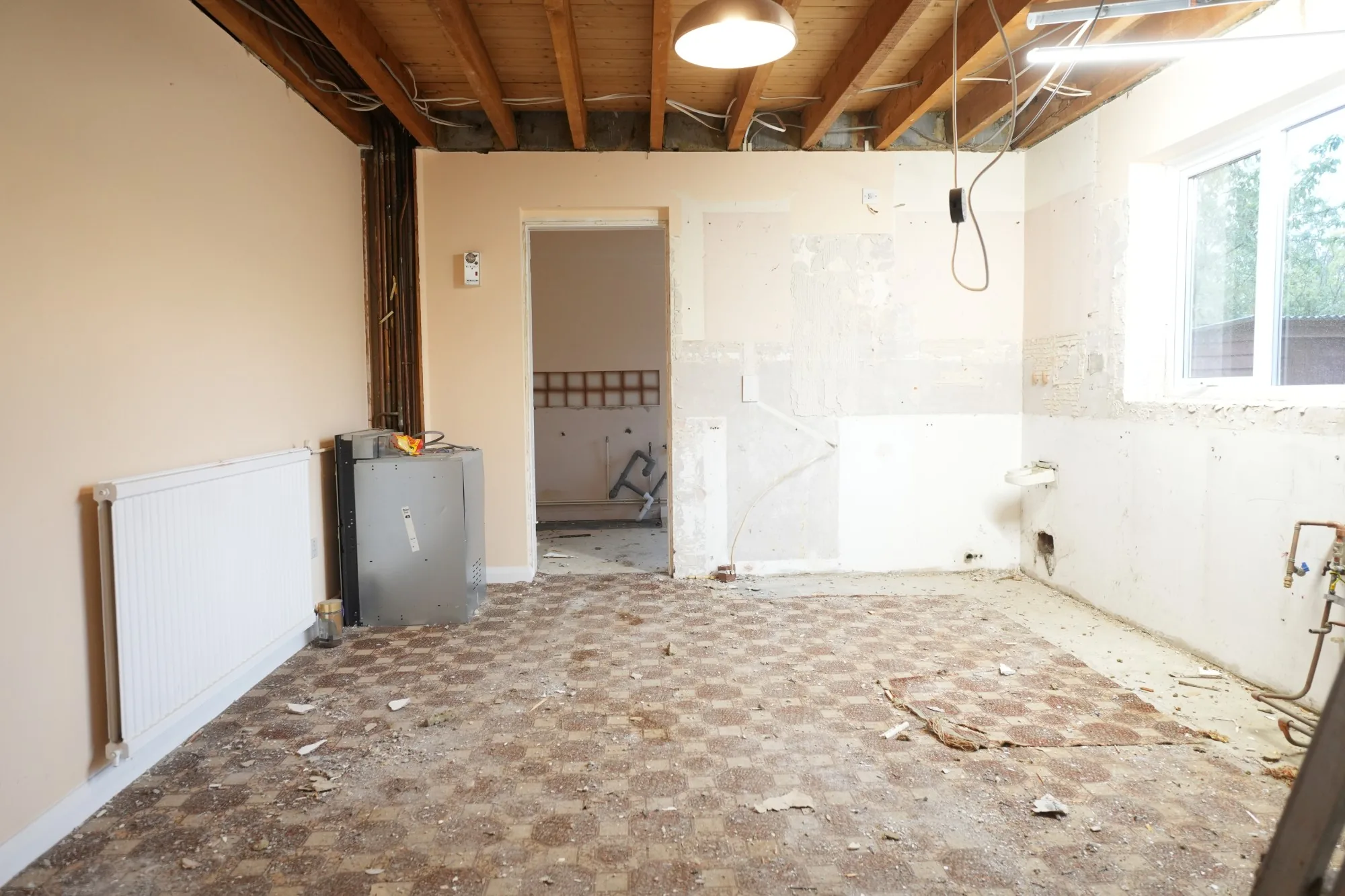
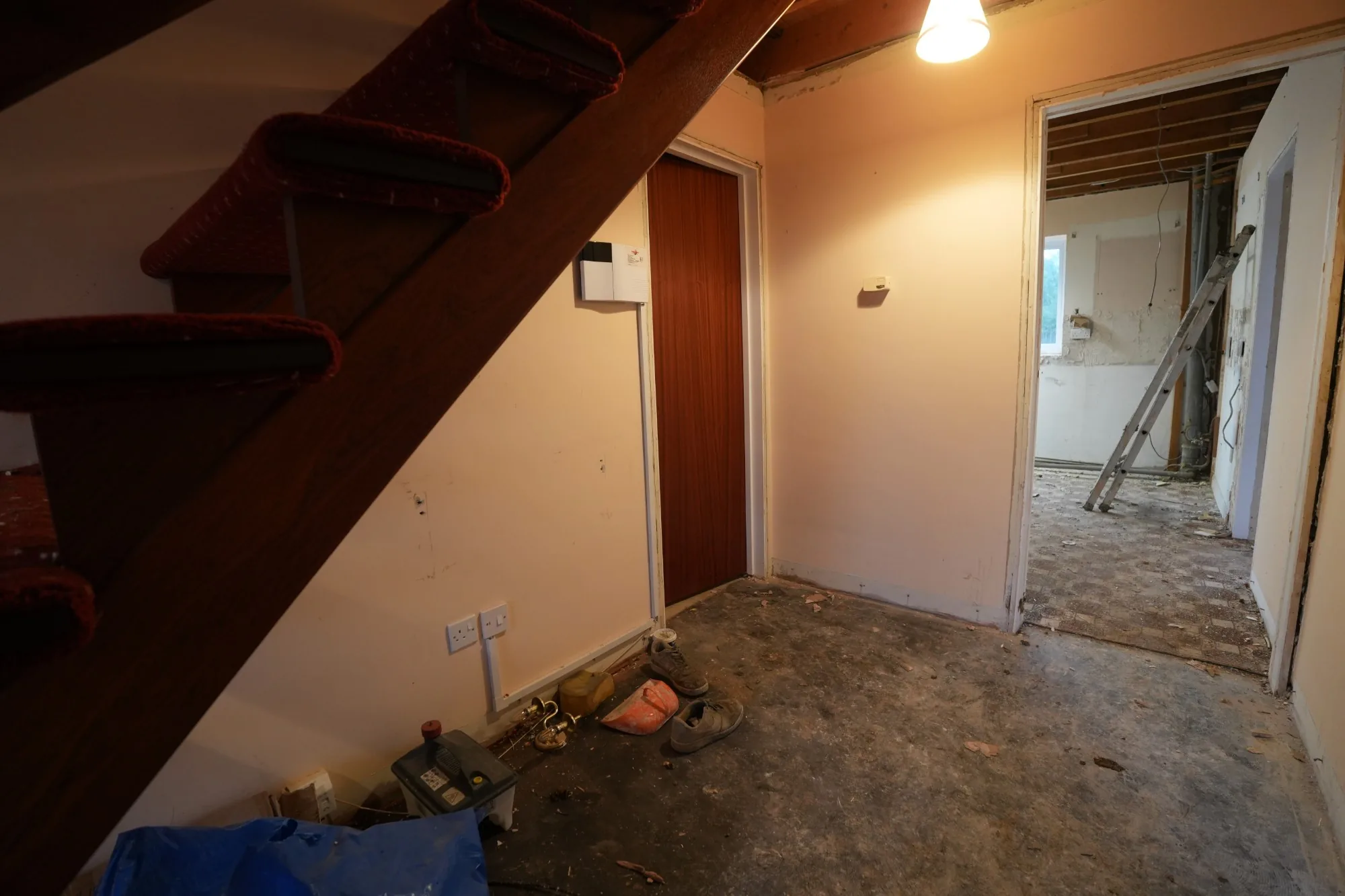
Our Cold Norton whole house renovation is a good example of why. The owners bought an older house with a dated layout because it needed a complete refurbishment. Once the strip out began, ceilings were opened back to the joists, which exposed old pipework and wiring that had to be renewed, and props supported the structure while new openings were formed. None of that was visible from the front door at a viewing.
The checks below are the ones that tell you most before you commit. None of them guarantees you will find everything, but together they turn a hopeful guess into an informed one.
Which survey should you get on a house you plan to renovate?
For a renovation project, a RICS Level 3 Home Survey is usually the right one. RICS’s consumer guide to home surveys says to “choose an RICS Level 3 Home Survey if you’re dealing with a large, older or run-down property”, or a building that is “unusual or altered, or if you’re planning major works”. It describes a Level 2 as “most suitable for conventional properties that are in reasonable condition and are simple in form and layout”.
Tell the surveyor what you intend to do, for example removing a wall, extending or adding a floor, so the report covers the parts of the building those plans will affect. Our guide to the Level 3 survey, what it covers and what it misses goes into the detail, including the limits of what a survey can see.
Tip
Read the survey for what it could not inspect as well as what it found. Anything it flags for further investigation, such as drains, roof timbers or electrics, is a question to answer before you exchange, not after.
How do you check planning history and Article 4 restrictions?
Start with your local planning authority, which for Essex homes is usually the district, borough or city council, for example Chelmsford City Council or Brentwood Borough Council. Its online planning register shows past applications and decisions on the property, which can reveal extensions that were never approved or conditions attached to earlier consents. Ask your solicitor to confirm that any past building work had the right sign off.
Then ask whether permitted development rights still apply. The Planning Portal’s guidance on permitted development rights explains that a council may have removed some of those rights through an “Article 4” direction, most commonly in conservation areas, and says you “can check with the local planning authority if you are not sure”. If one applies, work you assumed was exempt may need a planning application.
Also find out whether the house is listed or in a conservation area, because that changes what you can do to it and how. Our listed building renovation page explains how we approach heritage properties.
What structure and services problems cost the most to fix?
The expensive problems tend to be the ones behind the finishes. Walk the house with that in mind and note anything the survey should look at again:
- Structure. Cracks, sloping floors, bowing walls, sagging ceilings, and past openings that look too wide for what supports them.
- Roof and damp. Missing or slipped tiles, stained ceilings, damp patches and signs of poor ventilation.
- Services. Old consumer units, fabric covered wiring, lead or failing pipework, and a boiler of unknown age.
- Drainage. Slow drains, manhole covers that are hard to lift and any history of problems.
- Asbestos. Likely in older homes and not something to disturb yourself.
On asbestos, the Health and Safety Executive’s asbestos frequently asked questions say it “may be part of any commercial or domestic building which was built or refurbished before the year 2000”. HSE advises telling builders about it before they start, and “strongly encourages the use of trained professionals” to repair or remove it.

If your plans involve changing the structure, an engineer will be involved sooner or later. Our guide on whether you need a structural engineer explains what they do, and Craig covers it in his film what does a structural engineer do?
Watch out
A low asking price can disappear quickly once structure, services and asbestos are dealt with. Price the worst plausible version of the house, not the best one, before you decide what to offer.
How much should you budget, and what contingency makes sense?
Budget for the purchase, the works, professional fees, moving or renting costs while the work is done, and a contingency. The last one is the item buyers most often leave out.
Craig Bellamy, founder of Madisons, gives his view in his film on contingency. He says that when you are digging in the ground, “You could dig into drainage, you could find a well, you just don’t know.” His advice is “keep 10% as a good contingency plan until you’re out the ground”. Once the work is out of the ground, he says, you are “pretty much safe to spend that on niceties”.
His full answer is on how much contingency should I keep for a build? Treat 10% as a starting point for a straightforward project. The older and more altered the house, and the more structural work you plan, the more reasonable it is to keep a larger margin.
Who should look at the house before you exchange?
Your surveyor, your solicitor and, ideally, a builder. The surveyor reports on the condition of the building, the solicitor deals with title and planning paperwork, and a builder can tell you what your plans are likely to involve in practice.
Ask any builder you are considering whether they will walk the property with you before you commit. Our whole house renovation process starts with a site visit and brief, and the planning position is confirmed at that visit. If you are working out how you will live while the work happens, see whether you can stay in the home during a renovation.
Take your survey, the planning history and your list of questions with you, so the conversation is about the actual building rather than a general idea of what renovation costs.
Sources and further reading
- House surveys in the UK: the costs, types and benefits of an RICS Home Survey, RICS
- Permitted development rights, Planning Portal
- Asbestos frequently asked questions, Health and Safety Executive
Frequently asked questions
What survey should you get on a house that needs renovating?
For a house that needs real work, a RICS Level 3 Home Survey is usually the sensible choice, because RICS says to choose it for a large, older or run-down property, or one that is unusual or altered. A Level 2 is aimed at conventional homes in reasonable condition. Whichever you choose, tell the surveyor what you plan to change so they can look at the right things.
Can you get a builder to look at a house before you buy?
Yes, and it is worth asking before you exchange. A builder cannot replace a survey, but they can tell you what the layout, structure and finishes are likely to involve and whether your plans look realistic. Ask any builder you are considering whether they will walk the property with you first. Our own whole house renovation process starts with a site visit and brief.
What renovation problems are most expensive to fix?
Problems with the structure and what lies hidden are usually the costliest: movement or poor foundations, damaged or undersized support over openings, failed drainage, old wiring and pipework, and materials such as asbestos that need specialist handling. Cosmetic work looks dramatic but is rarely the expensive surprise. This is why the survey, an engineer’s view and a contingency matter more than the finishes budget.
How much should you keep back when you buy a house to renovate?
Craig Bellamy’s advice is to hold a contingency of 10% of the build budget until the work is out of the ground, because you cannot know what digging will uncover. Older houses and bigger structural changes are the likeliest to use it. Keep it separate from your fees, finishes and moving costs, so it is there only for genuine surprises.